
Amazon Echo Dot (Newest Model, Deep Sea Blue) Review: Compact Alexa Speaker with Smarter Sound and Sensing
Overview
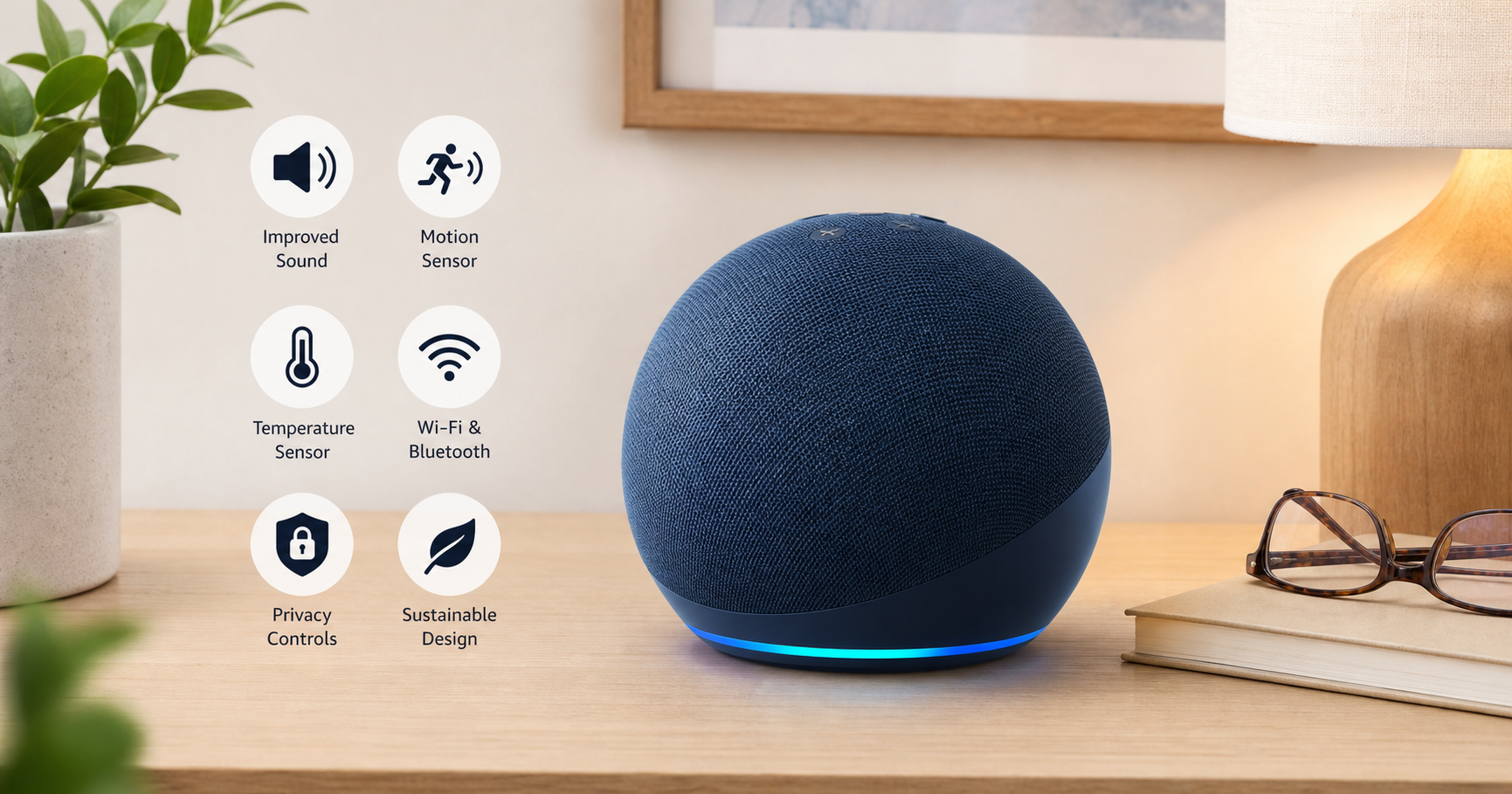
The Amazon Echo Dot (newest model) in Deep Sea Blue is Amazon’s latest compact Alexa smart speaker, aligning with the 5th‑generation Echo Dot hardware. It keeps the familiar spherical form factor but upgrades the internal driver, microphones, and onboard sensors to deliver more vibrant sound and greater smart‑home utility in a small footprint.
Amazon positions this Echo Dot as an ideal speaker for bedrooms, dining rooms, and home offices. It doubles as a hands‑free assistant and a basic automation hub thanks to motion and temperature sensing, routines, and deeper integration with the evolving Alexa+ service.
If you’re considering a first Alexa device or upgrading from an older Dot, this model targets you with better sound, more useful sensors, and a slightly more polished overall experience.
Key Highlights
- Improved sound quality with clearer vocals and noticeably deeper bass for a device of this size.
- Built‑in motion and temperature sensors for trigger‑based smart‑home routines.
- Alexa voice assistant with support for music, audiobooks, podcasts, timers, reminders, and more.
- Alexa+ early access support, delivering a more proactive and context‑aware assistant experience.
- Wi‑Fi and Bluetooth connectivity, plus optional integration with compatible eero systems to help extend Wi‑Fi coverage.
- Compact, modern design in Deep Sea Blue that fits easily on nightstands, shelves, or desks.
- Privacy controls, including a physical microphone mute button and multiple layers of software protection.
- Sustainability considerations such as recycled materials and fully recyclable packaging.
From a value perspective, the Echo Dot typically sits at around $79.99, making it one of the more budget‑friendly smart speakers in Amazon’s lineup while still delivering meaningful upgrades over earlier Dots.
Core Features
Design and Build
The Echo Dot (newest model) preserves the small spherical shape introduced in the 4th generation, wrapped in a fabric mesh that helps it blend into home decor. The Deep Sea Blue color is a darker, more understated blue that is less likely to show dust and fingerprints than lighter finishes.
Controls are straightforward: physical buttons on the top handle volume up/down, microphone mute, and action functions. The familiar LED light ring at the base provides visual feedback for Alexa status, volume changes, and notifications.
Audio Performance
Inside, Amazon has focused on improving the single full‑range driver, resulting in:
- Clearer dialogue and vocals, which matters for news briefings, podcasts, and audiobooks.
- Fuller bass response compared to older Echo Dots, enough to make music playback more enjoyable in small to medium rooms.
- Balanced sound at moderate volumes, with some expected compression and reduced detail at higher volume levels.
While it can’t match the output or stereo separation of larger speakers or Echo models with multiple drivers, the audio quality is a noticeable upgrade for background listening and casual use.
Smart Assistant and Alexa+
As an Alexa‑enabled device, the Echo Dot handles the usual range of voice‑assistant tasks:
- Setting timers, alarms, and reminders.
- Answering general knowledge questions.
- Providing weather, traffic, and calendar updates.
- Controlling compatible smart‑home devices.
- Managing shopping lists and basic household tasks.
This model is also designed for Alexa+, Amazon’s newer, more proactive version of Alexa. With Alexa+ enabled, the Dot can become smarter about context, routines, and follow‑up suggestions, though some Alexa+ features may eventually sit behind subscription or Prime‑linked access.
Sensors and Smart‑Home Integration
Two built‑in sensors distinguish this model from earlier Dots:
- Motion sensor: Can detect presence in a room and trigger routines—for example, turning on smart lights when you walk in or pausing music when you leave.
- Temperature sensor: Can feed into routines controlling fans, smart plugs, or thermostats—such as turning on a fan when the room gets too warm.
These additions make the Echo Dot more capable as a small‑scale automation node, especially in rooms where you don’t want to install a dedicated motion sensor.
The Dot connects over dual‑band Wi‑Fi and supports Bluetooth audio. It can:
- Control smart plugs, bulbs, switches, and thermostats that are Alexa‑compatible.
- Join multi‑room audio groups with other Echo devices.
- Pair with a Fire TV to act as a TV speaker in a basic home‑theater setup.
- Extend coverage when linked with a compatible eero Wi‑Fi mesh system.
Privacy and Sustainability
Amazon includes several privacy safeguards:
- A physical mic‑off button that electronically disconnects the microphones.
- Status LEDs and audio cues that clearly indicate when Alexa is listening or muted.
- Account‑level settings for managing voice recordings and data retention.
On the sustainability side, the device features a high percentage of post‑consumer recycled fabric and plastics and 100% recyclable packaging, a trend seen across newer Echo products.
Usage Experience
Setup
Setup is handled through the Alexa mobile app. After plugging in the Echo Dot, the app guides you through Wi‑Fi configuration, language settings, and account linking. For most users, the process takes only a few minutes.
Once connected, you can:
- Choose default music and podcast services (Amazon Music, Spotify, Apple Music, etc.).
- Organize the Dot into rooms and groups within the Alexa app.
- Create or import routines that use motion and temperature as triggers.
Day‑to‑Day Use
In daily use, the Echo Dot performs best in small or moderately sized rooms:
- In a bedroom, it works well as an alarm clock replacement, ambient sound player, and voice‑controlled lamp switch.
- In a home office, it handles quick questions, meeting reminders, and background music.
- In a dining or living area, it offers light entertainment and serves as a convenient voice remote for lights, plugs, and thermostats.
Voice recognition is generally solid, even with some background noise, as long as the speaker is not pushed to maximum volume. When it is playing music loudly, you may need to speak a bit more clearly or use the wake word from closer range.
Service and Ecosystem Considerations
The Echo Dot relies closely on the Amazon ecosystem. If you already use Amazon Music, Fire TV, Kindle, or Prime, the integration feels cohesive. Integration with third‑party platforms (Spotify, Apple Music, Philips Hue, etc.) is strong but still mediated by Alexa skills and account linking.
If you prefer to minimize Amazon account dependence, this device may feel more restrictive than platform‑agnostic Bluetooth speakers.
Strengths
- Compact size with improved sound: Delivers better audio than previous‑generation Dots while remaining unobtrusive.
- Built‑in motion and temperature sensors: Enable automation without extra hardware.
- Versatile smart‑home hub for basic to intermediate setups, especially with lights, plugs, and thermostats.
- Good value at around $79.99 given the sound quality, assistant features, and sensors.
- Attractive Deep Sea Blue finish that blends into many decor styles.
- Robust Alexa ecosystem with wide device and service compatibility.
- Privacy features and recycled materials show consideration for security and sustainability.
Weaknesses
- Not a room‑filling speaker: Bass and volume are limited compared to larger Echo models or dedicated audio systems.
- No battery built in: Portability requires a separate battery base accessory.
- Heavily tied to Amazon services: Best experience assumes you’re comfortable with Alexa and an Amazon account at the center of your smart home.
- No line‑out jack: Unlike some older Echo models, you can’t easily connect it via 3.5 mm audio cable to external speakers.
- Alexa+ complexity: As Alexa+ evolves, some users may find the distinction between “standard” Alexa and Alexa+ features confusing.
Suitable Scenarios
The Echo Dot (newest model) is well‑suited for:
- First‑time smart‑speaker buyers who want an affordable entry into Alexa and smart‑home control.
- Bedrooms where it can act as an alarm, white‑noise generator, and lamp controller.
- Home offices for quick information, reminders, and ambient music.
- Apartments and smaller homes where space is limited and a larger speaker is unnecessary.
- Secondary rooms—such as kitchens, hallways, or guest rooms—as part of a wider multi‑room audio and voice‑control setup.
It is less ideal if you:
- Want audiophile‑level playback or powerful, room‑shaking bass.
- Prefer to avoid always‑listening voice assistants in private spaces.
- Rely primarily on non‑Amazon ecosystems and services that don’t integrate well with Alexa.
Final Evaluation
The Amazon Echo Dot (newest model) in Deep Sea Blue refines the formula that made earlier Dots so popular. It offers measurable audio improvements, adds genuinely useful motion and temperature sensors, and deepens integration with Alexa and smart‑home routines—all while staying compact and relatively budget‑friendly at around $79.99.
For most people looking to add voice control and basic automation to a bedroom, home office, or smaller living space, this Echo Dot is an easy recommendation. Heavy music listeners and privacy‑sensitive users may prefer either a more powerful speaker or a less cloud‑centric device, but as an all‑round, mainstream smart speaker, the Echo Dot (newest model) remains one of the strongest options in its price and size class.