
Nintendo Switch 2 System Review: A Thoughtful Evolution of Nintendo’s Hybrid Console
Quick Summary
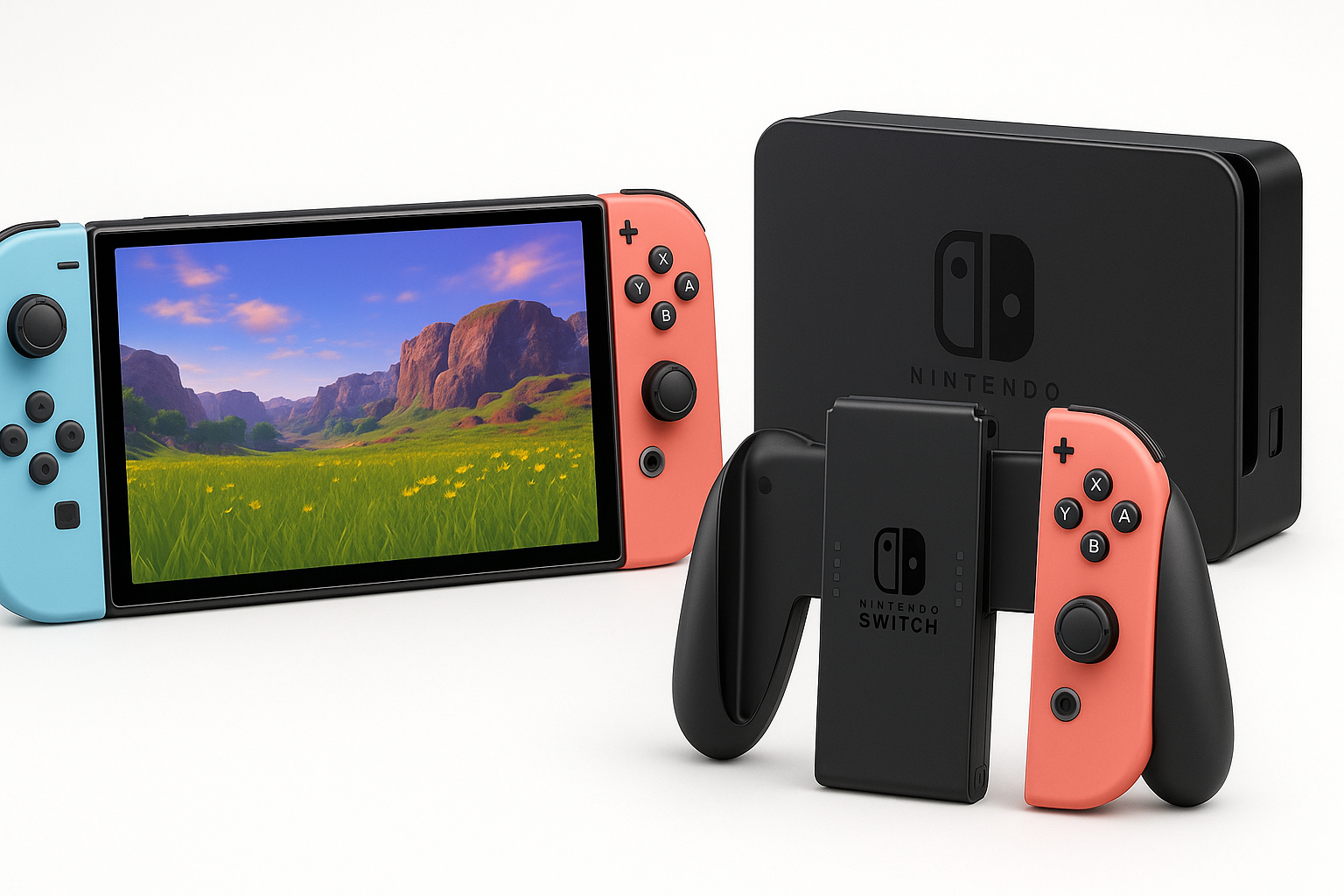
The Nintendo Switch 2 System is positioned as the next step in Nintendo’s hybrid gaming strategy. It keeps the familiar formula—one console that works seamlessly in TV, tabletop, and handheld modes—while making meaningful upgrades where the original and OLED models were starting to show their age.
Key highlights include:
- Larger 7.9" HDR LCD touch display with support for up to 120 fps in handheld mode.
- A redesigned dock with 4K output when paired with compatible TVs.
- Improved internals paired with 256 GB of storage, expandable via microSD Express.
- New Joy-Con 2 controllers with magnetic attachment and support for mouse-style controls in compatible games.
- Built-in GameChat for voice, screen sharing, and optional video chat while playing.
- Backward compatibility with physical and digital Nintendo Switch games, plus an expanding library of Nintendo Switch 2–focused titles.
For buyers evaluating whether to step into Nintendo’s ecosystem—or upgrade from an existing Switch—the Switch 2 System offers a more modern, future‑ready take on a proven concept at around $499.00 on Amazon.
Detailed Analysis
Design and Build
The Nintendo Switch 2 closely follows the silhouette of the original Switch, but refinements make it feel more contemporary.
- Dimensions and weight: It remains portable and light enough for extended handheld sessions, while still feeling solid and well‑built.
- Materials and finish: The chassis and Joy-Con 2 rails feel sturdy, with tight tolerances around the detachable controllers. The overall impression is a premium handheld that can withstand daily use, travel, and frequent dock/undock cycles.
- Color and styling: The base System configuration commonly ships with a black console and dock paired with light blue (L) and light red (R) Joy-Con 2. The design is familiar yet visibly "next‑gen" compared with the first‑generation Switch.
Display: 7.9" HDR LCD, Up to 120 fps
One of the most notable upgrades is the 7.9‑inch LCD touch display:
- Size: The larger screen significantly improves immersion in handheld and tabletop modes compared with the original 6.2" panel.
- HDR support: High Dynamic Range increases perceived contrast and color depth in supported titles, making bright scenes more vibrant and dark areas easier to read.
- Refresh rate: Support for up to 120 fps can deliver smoother gameplay in titles that are optimized for higher frame rates, especially in less graphically intensive games or competitive experiences.
- Touch input: Capacitive touch remains responsive for menu navigation, puzzle games, and UI interactions.
While it is still LCD rather than OLED, the panel’s brightness and HDR support help close the gap in perceived quality, especially in well‑lit environments.
Performance and 4K Docked Output
Under the hood, the Switch 2 is built for better performance than its predecessors, particularly when docked:
- Enhanced processing power: Games benefit from improved frame‑rate stability and higher resolutions, both handheld and docked.
- 4K‑capable dock: When connected to a compatible TV, the included dock can output up to 4K resolution. Many games will scale dynamically, with more demanding titles targeting lower resolutions but still benefiting from sharper rendering and better image processing.
- Frame‑rate behavior:
- Handheld: Up to 120 fps in supported titles.
- Docked at 4K: Typically capped at 60 fps, depending on the game.
For players coming from the original Switch, the difference in clarity and performance—especially in newer, more ambitious titles—should be immediately noticeable on both TV and handheld.
Storage and Expandability
The base Nintendo Switch 2 System includes 256 GB of internal storage (with a portion reserved for system software):
- This is a significant upgrade over earlier Switch models, allowing several large first‑party games plus a variety of smaller titles before storage management becomes a concern.
- Storage can be expanded via microSD Express cards (sold separately), which offer notably higher throughput than traditional microSD, reducing load times in compatible scenarios.
For digital-heavy libraries or families sharing the console, adding a high‑capacity microSD Express card will still be advisable.
Joy-Con 2 Controllers and Input Features
The Joy-Con 2 controllers continue the detachable‑controller concept but with some meaningful refinements:
- Magnetic attachment: Instead of purely mechanical rails, Joy-Con 2 use magnetic coupling in combination with guide rails to make attaching and detaching smoother and more secure.
- Mouse-style controls: In supported games, Joy-Con 2 can function with mouse-like precision—useful for cursor navigation in menus, creative applications, and certain strategy or shooter-style titles.
- Multimode support: They can be used attached to the console, clipped into a Joy-Con 2 grip, or used individually for same‑system multiplayer.
- Motion and HD rumble (where supported) remain part of the experience, continuing Nintendo’s tradition of tactile and motion‑based gameplay.
For existing Switch owners, the core feel will be familiar, but the refinements help address alignment, wobble, and attachment smoothness.
GameChat and Online Features
The Switch 2 introduces GameChat, a more integrated online communication layer:
- Voice chat: Talk to friends directly through the console while playing compatible games.
- Screen sharing: Share your active gameplay view with friends for cooperative play, coaching, or casual spectating.
- Optional video chat: With a compatible camera accessory (sold separately), GameChat supports video chat in supported regions and titles.
- Initially, GameChat is available without a Nintendo Switch Online membership during an open access period, after which a membership will be required for continued use.
Importantly, Nintendo notes that not all existing Switch games are fully compatible with Nintendo Switch 2 and GameChat. Checking compatibility details for specific titles is recommended, especially for niche or older games.
Game Library and Ecosystem
The Nintendo Switch 2 sits at the center of an already robust ecosystem:
- Backward compatibility: It supports physical and digital Nintendo Switch games, giving new owners access to a vast back catalog from day one.
- Nintendo Switch 2 exclusives: New titles like Mario Kart World, Donkey Kong Bananza, and future first‑party releases are designed to take advantage of the improved hardware and online features.
- Enhanced content for existing games: Certain prior-gen games can be upgraded with Nintendo Switch 2-specific enhancement packs, offering improved performance, visual upgrades, or added content.
- Local and online multiplayer: Same-system split play, local wireless between multiple Switch 2 units, and online play remain key strengths of the platform.
For families and social gamers, the mix of party games, platformers, RPGs, and family-friendly titles continues to be a major draw.
User Experience
Setup and Everyday Use
Initial setup is straightforward:
- Unbox the console, dock, Joy-Con 2 controllers, and included accessories.
- Connect the dock to your TV via the included high-speed HDMI cable and plug in the power adapter.
- Attach Joy-Con 2 to the console or grip and follow the on‑screen steps to configure language, region, Wi‑Fi, and user accounts.
Nintendo’s UI remains approachable for younger users while being snappy and functional for advanced users. The larger display, combined with HDR and improved responsiveness, makes menu navigation, eShop browsing, and handheld gameplay more comfortable.
Handheld vs. Docked
- Handheld mode: The best choice for solo play, travel, and casual sessions. The bigger screen and improved processing power make even dense open‑world games more enjoyable away from the TV.
- Tabletop mode: Ideal for quick multiplayer sessions using the built‑in kickstand and detached Joy-Con 2 controllers.
- TV mode: Through the 4K-capable dock, the console becomes a compact living‑room system suitable for large‑screen multiplayer and cinematic single‑player titles.
Switching between these modes remains smooth, reinforcing the “play anywhere” promise.
Online and Social Features
With GameChat integrated into the platform, online sessions feel less fragmented:
- Inviting friends, chatting during play, and sharing gameplay are easier and more centralized.
- For parents, Nintendo’s ecosystem still emphasizes parental controls, letting adults manage online interactions, playtime limits, and content access.
Who It Fits Best
The Nintendo Switch 2 System is especially well‑suited for:
- Families seeking a shared console with age‑appropriate titles and accessible multiplayer.
- Nintendo fans who want the best current hardware for first‑party exclusives and the expanding Switch 2 library.
- Portable gamers who value a high‑quality handheld experience with the option to dock at home.
- Lapsed gamers returning for flagship franchises like Mario Kart, The Legend of Zelda, and Donkey Kong in updated forms.
Pros
- Larger 7.9" HDR LCD screen substantially improves handheld and tabletop play.
- 4K-capable dock delivers sharper visuals on compatible TVs.
- Enhanced performance for more demanding games and higher frame rates.
- 256 GB internal storage, with high‑speed microSD Express expandability.
- Joy-Con 2 controllers with more secure, magnetic attachment and mouse-style controls.
- GameChat integrates voice, screen sharing, and optional video chat.
- Backward compatibility with a large library of Nintendo Switch physical and digital games.
- Strong lineup of exclusive and family-friendly titles.
- Flexible three‑mode design: TV, tabletop, and handheld in a single system.
Cons
- LCD (even with HDR) may not match the deep blacks and contrast of OLED panels.
- 4K output typically capped at 60 fps, and not all games will render at native 4K.
- GameChat and some online features require a paid Nintendo Switch Online membership after the open-access period.
- Additional storage via microSD Express and accessories (camera for video chat, Pro Controller, cases) add to the overall cost.
- Not every legacy Nintendo Switch game is fully optimized or compatible with all Switch 2 features.
Value Assessment
At approximately $499.00 on Amazon, the Nintendo Switch 2 System positions itself as a mid‑to‑premium hybrid console with strong long‑term value.
For New Buyers
If you don’t already own a Nintendo Switch, this is the most complete and future‑ready entry point into Nintendo’s ecosystem:
- You get modern hardware, generous onboard storage, and access to both the established Switch catalog and upcoming Switch 2 exclusives.
- Versatility across handheld, tabletop, and TV play makes the cost easier to justify than a single‑mode console or a dedicated handheld alone.
For Existing Switch Owners
Whether the upgrade is worth it depends on how you play:
- If you mostly play handheld, the larger HDR display, 120 fps support in some titles, and better performance represent a tangible step up.
- If you focus on TV gaming, the 4K-capable dock and higher performance in compatible titles provide a more modern living‑room experience.
- Those satisfied with a first‑gen or OLED Switch and who primarily play lighter titles may not see this as an urgent upgrade, but it is clearly the more future‑proof option.
Overall, the Switch 2 System offers a compelling blend of portability, performance, and exclusive games that should age well across this hardware generation.
Final Thoughts
The Nintendo Switch 2 System is a careful, user‑focused evolution of Nintendo’s hybrid console formula rather than a complete reinvention. By concentrating on a larger HDR screen, better performance, 4K docked output, and integrated social features via GameChat, it meaningfully modernizes the experience while keeping backward compatibility and family‑friendly design at its core.
For players entering the Nintendo ecosystem—or those ready to upgrade from older hardware—the Switch 2 strikes a strong balance between portability, versatility, and next‑gen readiness. While its LCD panel and ecosystem costs (online membership, accessories, and storage) leave some room for improvement, the overall package is well considered and highly competitive in today’s gaming landscape.