
SkaterTrainer Wheels Review: A Smarter Way for Beginners to Learn Skateboard Tricks
Introduction
Learning to skateboard can be intimidating, especially when you are trying to land your first ollie or kickflip and the board keeps shooting out from under you. The SkaterTrainer Wheels are designed to solve that exact problem by acting like “training wheels” for your skateboard, giving new skaters a way to practice tricks in place before taking them to full rolling speed.
Available on Amazon at around $28.99, this compact set of rubber wheel covers has become a popular gift for kids, parents, and adult beginners who want a safer, more controlled starting point for street and park tricks.
Product overview and key features
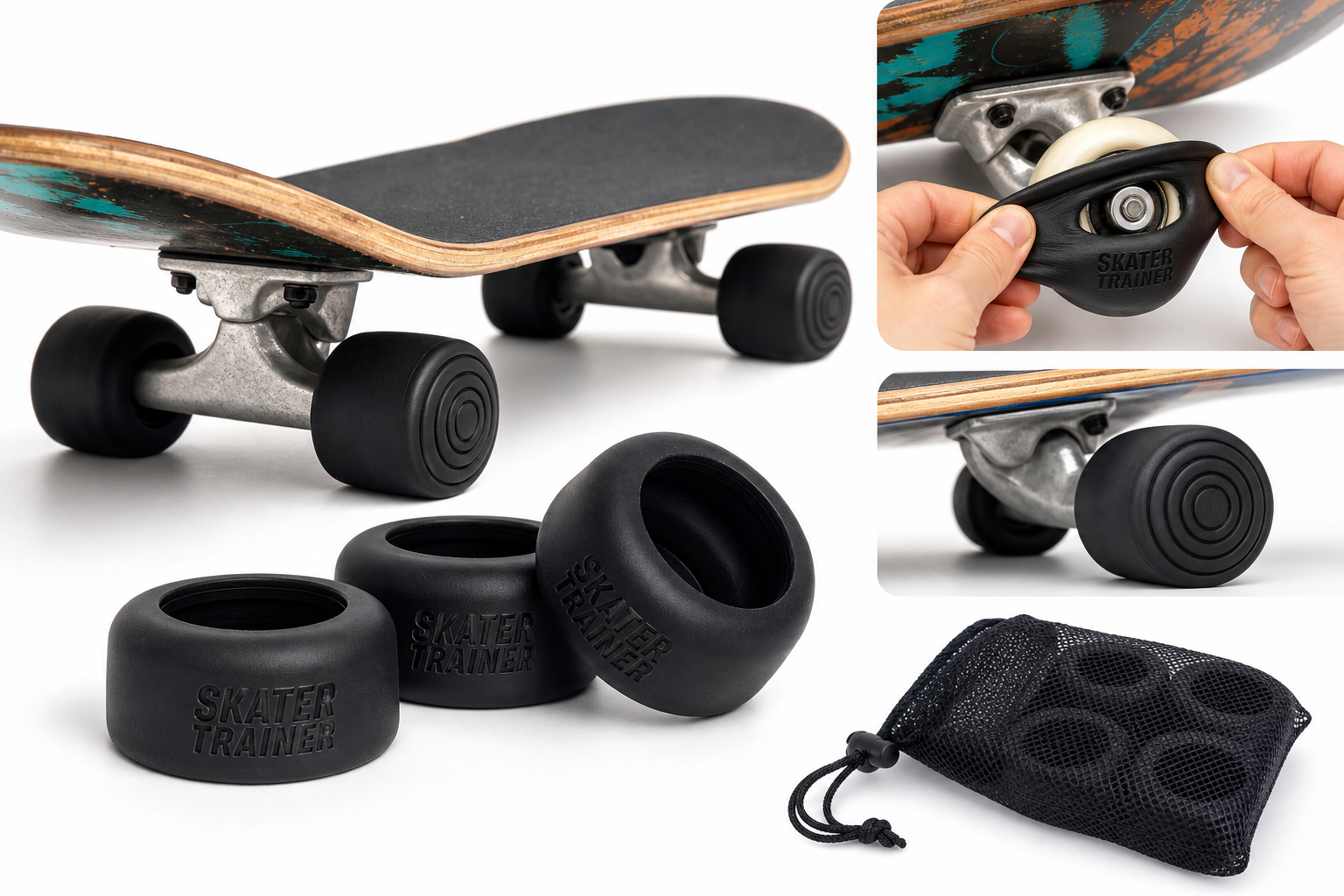
SkaterTrainer is essentially a set of four durable rubber pieces that stretch over your skateboard wheels to stop them from rolling. Once installed, the board stays mostly locked in place, so you can focus on the mechanics of each trick rather than fighting to keep the board under your feet.
Key features:
- Set of four trainers – One for each wheel, so the board is stabilized from all sides.
- Simple, tool‑free installation – You just stretch each SkaterTrainer over the wheel by hand; no hardware changes or adjustments to your trucks or bearings are required.
- Fits most trick skateboards – Designed to work with standard street/park skateboard wheels (typically in the ~48–65 mm range), covering the vast majority of complete setups.
- High‑grip, durable rubber compound – The material is flexible enough to slip on easily but firm enough to hold its shape and resist tearing after repeated practice sessions.
- Targets beginner tricks – Especially useful for learning the fundamentals: ollies, pop shove-its, kickflips, heelflips, and basic variations.
- Compact and portable – Small enough to toss in a backpack or skate bag, so skaters can bring them to the driveway, a parking lot, or the skatepark.
The concept is intentionally minimal: instead of a bulky frame or stand, SkaterTrainer uses the wheels themselves as the anchor point, which keeps the board’s feel close to normal while removing the uncontrolled rolling that so often leads to slam‑induced discouragement.
Performance and user experience
Setup and compatibility
Putting SkaterTrainer Wheels on is straightforward. You slide each piece over a wheel, stretching the rubber until it snaps into place around the diameter. Once seated, the wheel can still rotate a bit inside the rubber, but the outer surface of the trainer grips the ground, dramatically reducing motion.
For most standard complete skateboards, the fit is snug and secure. As long as you are using typical street or park wheels (not oversized cruiser or longboard wheels), the trainers should work as intended. Removing them is just as easy—peel them off and you are back to a normal rolling setup.
Learning curve and skill progression
SkaterTrainer is not meant to replace normal skating; instead, it offers a stepping stone between static practice and full-speed rolling. Beginners can:
- Practice foot positioning for ollies, shuv-its, and kickflips without worrying about the board shooting away.
- Work on popping the tail and sliding the front foot consistently.
- Build muscle memory and timing while the board stays largely in one spot.
Once the trick feels repeatable with the trainers on, skaters are encouraged to remove them and try the same motion rolling at low speed. In this sense, SkaterTrainer works well as a short‑term learning aid to bridge the confidence gap.
Stability and confidence for beginners
For kids, especially younger riders who are still developing balance and coordination, the added stability is a major benefit. Parents often like the idea of a safer environment for early attempts at tricks; falls can still happen, but the risk of the board slipping out unexpectedly is reduced.
Adult beginners and returning skaters can also find value here. Standing still while working through the mechanics of a trick can be less intimidating than immediately dealing with moving wheels, rough pavement, and obstacles.
Durability and maintenance
The rubber construction is designed for repeated stretching, twisting, and contact with rough surfaces. Under normal use on driveways, sidewalks, and smooth skatepark concrete, SkaterTrainer Wheels should last through many months (and often years) of sessions.
Maintenance is minimal:
- Wipe off dirt or grit as needed.
- Avoid prolonged exposure to extreme heat (such as leaving them on a dashboard) to prevent premature aging of the rubber.
- Check occasionally for cracks or deep cuts if the skater frequently practices on very rough ground.
Pros and cons
Pros
- Helps beginners learn tricks faster by removing the fear of the board rolling away mid‑attempt.
- Builds confidence for kids and new skaters who might otherwise give up after hard falls.
- Very easy to install and remove—no tools, hardware changes, or technical know‑how required.
- Compact and portable, making it simple to take to any spot.
- Works with most standard skateboards, so it is compatible with the majority of entry‑level completes.
- Useful training progression tool for ollies, pop shove-its, and flip tricks.
Cons
- Not a replacement for real rolling practice—skaters must eventually remove the trainers to fully master tricks.
- Limited compatibility with non‑standard setups, such as very large cruiser or longboard wheels.
- Most beneficial only at the beginner stage; experienced skaters will outgrow them once they are comfortable with basic tricks.
- Requires a bit of effort to stretch on and off, especially for younger children with smaller hands (an adult may need to help).
Conclusion and recommendation
SkaterTrainer Wheels are a thoughtful tool for anyone starting out in street or park skateboarding who wants a gentler learning curve for their first tricks. By immobilizing the board, they allow beginners to focus on body mechanics, timing, and confidence before transitioning to full‑speed attempts.
They are particularly well‑suited as a gift for kids, a supportive accessory for cautious beginners, or a practice aid for parents and teens learning together. While they will not replace the need for normal rolling practice, they can significantly reduce early frustration and make the journey to landing that first ollie or kickflip more approachable and enjoyable.
If you are shopping for a new skater and want an accessory that emphasizes skill building and safety rather than flashy gimmicks, the SkaterTrainer Wheels at around $28.99 on Amazon are a practical, beginner‑friendly option worth considering.