
The Boys of Dungeon Lane: Paul McCartney’s Most Intimate Late‑Career Album Yet
Introduction
“The Boys of Dungeon Lane” is Paul McCartney’s first new solo album in more than five years, and it arrives with a clear concept: revisiting the streets, houses and half‑forgotten corners of his youth in Liverpool. Rather than chasing trends or attempting to recreate Beatles‑era exuberance, McCartney leans into memory and perspective. The result is a concise 14‑track collection that plays like a guided walk through his formative years, with detours into present‑day reflection and understated love songs.
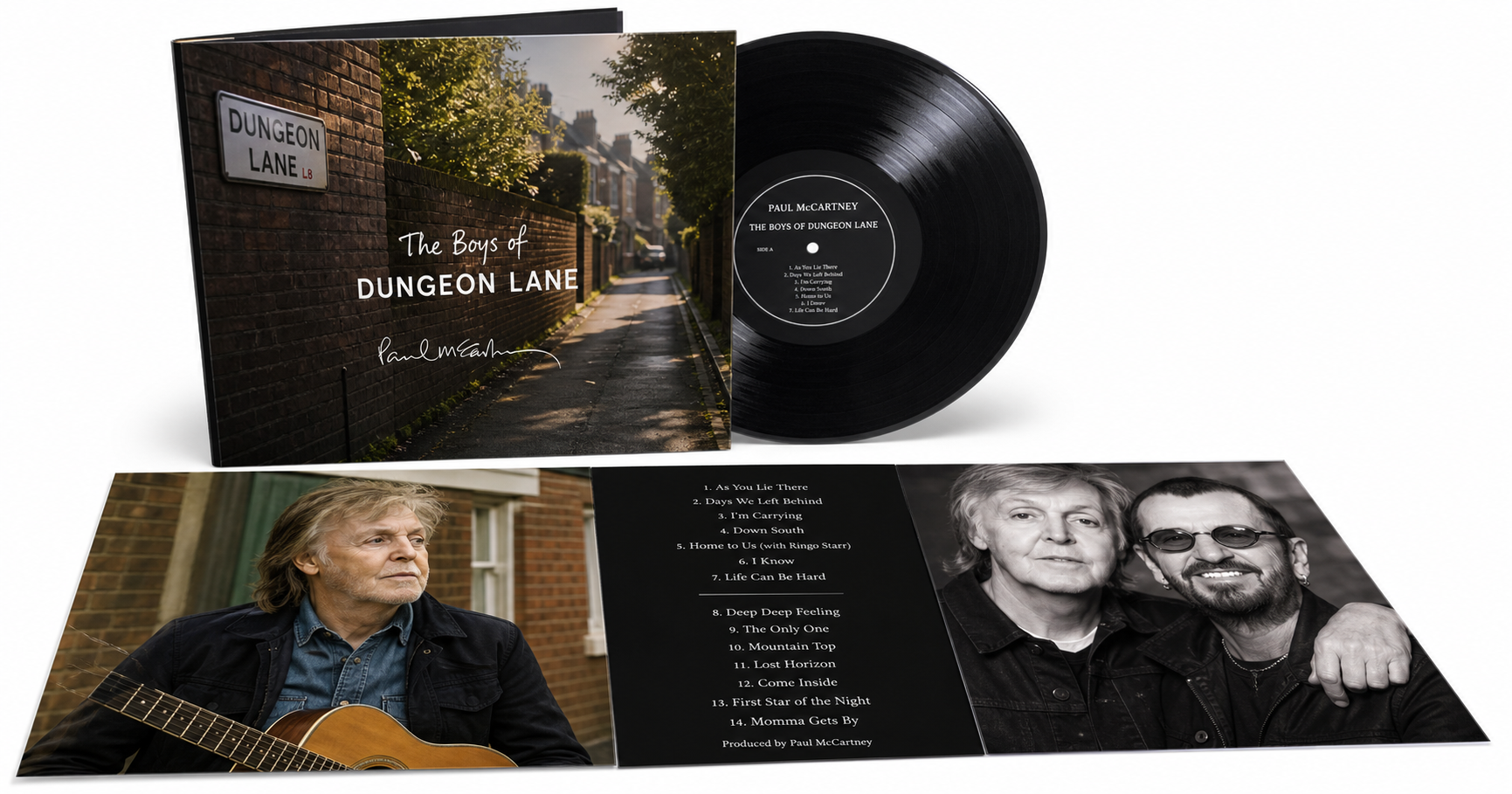
Available on streaming and in physical formats (including a collectible vinyl edition around $18.99), this release is positioned as a personal companion to his broader catalog—a quieter record that rewards close, beginning‑to‑end listening more than cherry‑picking singles.
Setup / Getting Started
On Amazon, “The Boys of Dungeon Lane” is offered both as a digital album and as physical media, with the product page at:
- https://www.amazon.com/dp/B0GTZK37RV
For the typical listener, there are two straightforward setup paths:
-
Streaming / Digital Purchase
- Add the album to your Amazon Music library or purchase the MP3 edition.
- Playback works on the Amazon Music app across phones, tablets, desktop, smart speakers, and some cars.
- Tracks are organized in the intended running order, starting with “As You Lie There” and closing on “Momma Gets By,” encouraging full‑album listening.
-
Physical Copy (e.g., Vinyl)
- If you opt for the vinyl or CD edition sold through Amazon or associated listings, expect a standard unboxing experience: jacket art featuring the Dungeon Lane sign, inner sleeves or a booklet with lyrics, and basic credits.
- Vinyl buyers will want to ensure their turntable is properly calibrated; this is a relatively dynamic, not brick‑walled, master, so quieter passages benefit from a clean stylus and a well‑aligned setup.
There are no complicated extras, download codes, or bundled apps to manage; the album behaves like any conventional studio release.
Daily Usage
In day‑to‑day listening, “The Boys of Dungeon Lane” behaves like a narrative, mid‑tempo record rather than a playlist of standalone hits. It’s well‑suited to:
- Focused evening listening – Several tracks (“Days We Left Behind,” “First Star of the Night”) are lyrically dense and reward paying attention to the details of McCartney’s recollections.
- Background soundtrack – Lighter, groove‑oriented songs (“Down South,” “We Two”) and the warmth of “Home to Us” sit comfortably at low volume during everyday tasks.
- Front‑to‑back spins – The running time, roughly 45–50 minutes, is manageable for listening in one sitting, making it easy to treat as a single narrative arc rather than dip in and out.
Thematically, daily listening keeps circling back to two pillars:
- Liverpool memories – Place names, small domestic scenes and long‑ago friendships recur repeatedly.
- Late‑life perspective – Lyrics often acknowledge age, loss, and gratitude without tipping into sentimentality.
For longtime fans, that mix of specificity and perspective is the main everyday appeal: it feels like McCartney filling in the margins of stories that have been hinted at for decades.
Performance & Reliability
From a technical standpoint, “The Boys of Dungeon Lane” is a polished, modern studio production that still leaves space for organic instruments and room tone.
- Recording quality: Vocals are front‑and‑center and generally dry, with moderate reverb—closer and more intimate than some of his more heavily produced 1980s/1990s work.
- Dynamic range: The mastering avoids the harsh, excessively compressed sound that plagues many contemporary releases. Quiet passages stay genuinely soft, letting crescendos land.
- Instrumental palette: Guitars, piano, bass, and occasional strings dominate. There are nods to Wings‑style rock in tracks like “Mountain Top” and more delicate McCartney balladry in “As You Lie There.”
- Vocal performance: McCartney’s voice reflects his age—grainier and less agile at the extremes—but smart arrangements and key choices work around limitations rather than fighting them. The slightly worn timbre arguably adds authenticity to the reminiscences.
Streaming reliability is typical for a major‑label release on Amazon: gapless playback works properly, and track metadata (titles and credits) is correctly tagged. On vinyl, users generally report flat pressings and low surface noise when the record is well‑cared for, though—as with all pressings—individual defects can vary copy to copy.
What Works Well
1. Cohesive, reflective concept
The album’s strongest suit is its thematic coherence. Songs like “Days We Left Behind,” “Home to Us,” and “Life Can Be Hard” all trace different angles on the same core idea: how early experiences, family and friendships shaped the person McCartney became. This unity makes the record feel like a complete statement rather than a loose assortment of leftovers.
2. Strong sequencing and flow
The track order is carefully considered. Early songs establish mood and place, mid‑album pieces provide stylistic variety, and the closing stretch (“First Star of the Night,” “Momma Gets By”) gently winds things down without a jarring tonal shift. Listening straight through feels purposeful, not obligatory.
3. A highlight duet with Ringo Starr
“Home to Us” features the first true duet between McCartney and Ringo on a studio album, turning what could have been a simple nostalgia exercise into a genuine moment of living Beatles history. The song avoids over‑the‑top fan service, framing the two voices within a modest, affectionate arrangement.
4. Melodic consistency
Even in his eighties, McCartney remains adept at crafting memorable melodic lines. Hooks in tracks like “Lost Horizon” and “Come Inside” are understated but stick on repeat listens, proving that his core songwriting instincts are intact.
5. Production that suits the material
The sound avoids both retro pastiche and hyper‑modern gloss. Acoustic instruments and warm electric tones dominate, giving the record a timeless feel. Subtle harmonies and instrumental details reveal themselves over time without drawing attention away from the lyrics.
What Could Be Improved
1. Limited entry points for casual listeners
While there are accessible tracks, “The Boys of Dungeon Lane” is not packed with obvious, radio‑ready singles. Listeners unfamiliar with McCartney’s history may find the focus on specific places and memories less immediately gripping than broader themes or big pop moments.
2. Occasional pacing lulls
The mid‑tempo emphasis, combined with an overall reflective mood, means certain stretches can blur together on early listens. A few more pronounced tempo or stylistic shifts might have given the album additional contour.
3. Vocals may divide opinion
Fans who cherish the youthful tone of Beatles‑era McCartney may find his current vocal texture an adjustment. The production generally works with his present range, but there are moments where age‑related limitations are noticeable.
4. Sparse visual and physical extras
Outside of the cover art and any included lyric booklet in select physical editions, the standard Amazon product offering is relatively minimal. Collectors hoping for extensive liner essays, archival photos, or long‑form commentary won’t find them integrated into this basic retail package.
Overall Impression
“The Boys of Dungeon Lane” is best approached as a late‑chapter memoir in musical form. It doesn’t aim to compete with the landmark peaks of McCartney’s past, nor does it pretend to. Instead, it offers a low‑key, carefully written and produced set of songs that invite listeners into specific corners of his life: a street sign near an airport, a family home, adolescent wanderings with friends who later became cultural icons.
For longtime fans, this album is a worthwhile and often moving addition to his catalog—particularly if you’re interested in his more personal, reflective side. For newcomers, it functions more as a companion piece to his history than an ideal starting point, but it still demonstrates the qualities that have defined his work for decades: melody, craftsmanship, and an ability to find universality in small, personal stories.
If you value narrative songwriting and are curious about how an artist of McCartney’s stature looks back on where it all began, “The Boys of Dungeon Lane” is a thoughtful, consistently crafted listen, and the Amazon edition around $18.99 provides a straightforward way to add that story to your collection.